Managing Your Support at Home Funding and Co-Contributions
Don’t Leave Your Funding Unused: Making the Most of Home Care
Recently, our Home Care Client Engagement Manager, Janine Batten, presented at the Ageing Well Expo. Drawing on her years of experience, Janine’s presentation focused on educating expo-goers about how to make the most of the Support at Home funding.
FOR ADVICE: BOOK A FREE HOME CARE CONSULT
Ageing Well Expo
The Ageing Well Expo is held across three Australian cities (Perth, Melbourne and Sydney) throughout the year. The expo aims to empower individuals and families with the knowledge to feel confident in the future.
With a range of exhibitors showcasing the latest innovations in aged care, health and living well, it is a fantastic expo for helping to inform choices regarding home care services.
Making The Most Of Support At Home
Catholic Homes’ Home Care Client Engagement Manager Janine Batten detailed the Australian government’s introduction of the Support at Home program.
The program that delivers government-funded aged care services replaced the Home Care Packages Program on 1 November 2025. The new program replaces 4 levels of funding for these services with 8 levels, making more services more accessible and helping older people stay at home for longer.
| Classification | Quarterly budget | Annual amount |
|---|---|---|
| 1 | $2,752.50 | $11,010.01 |
| 2 | $4,112.84 | $16,451.35 |
| 3 | $5,634.20 | $22,536.81 |
| 4 | $7,617.13 | $30,468.51 |
| 5 | $10,182.38 | $40,729.53 |
| 6 | $12,341.32 | $49,365.27 |
| 7 | $14,915.00 | $59,660.00 |
| 8 | $20,034.28 | $80,137.12 |
Current as of 1 July 2026. Funding amounts are indexed on 1 July each year.
Important to note:
- The funding budgets on a quarterly basis
- Maximum rollover limits per quarter
- $1000 or
- 10% of your funds, whichever is greater
Support At Home Services
Support at Home services can be categorised into two categories: non-contributory and contributory. Non-contributory services are fully funded by the government, whereas contributory services require a means-tested co-contribution for the individual.
Support at Home services are categorised as follows:
Clinical and Allied Health
Includes Clinical Care such as:
- Nursing
- Wound care
- Medication administration
- Clinical assessment
Includes Allied Health, such as
- Physiotherapy
- Occupational therapy
- Podiatry
- Dietician
- Speech Therapy
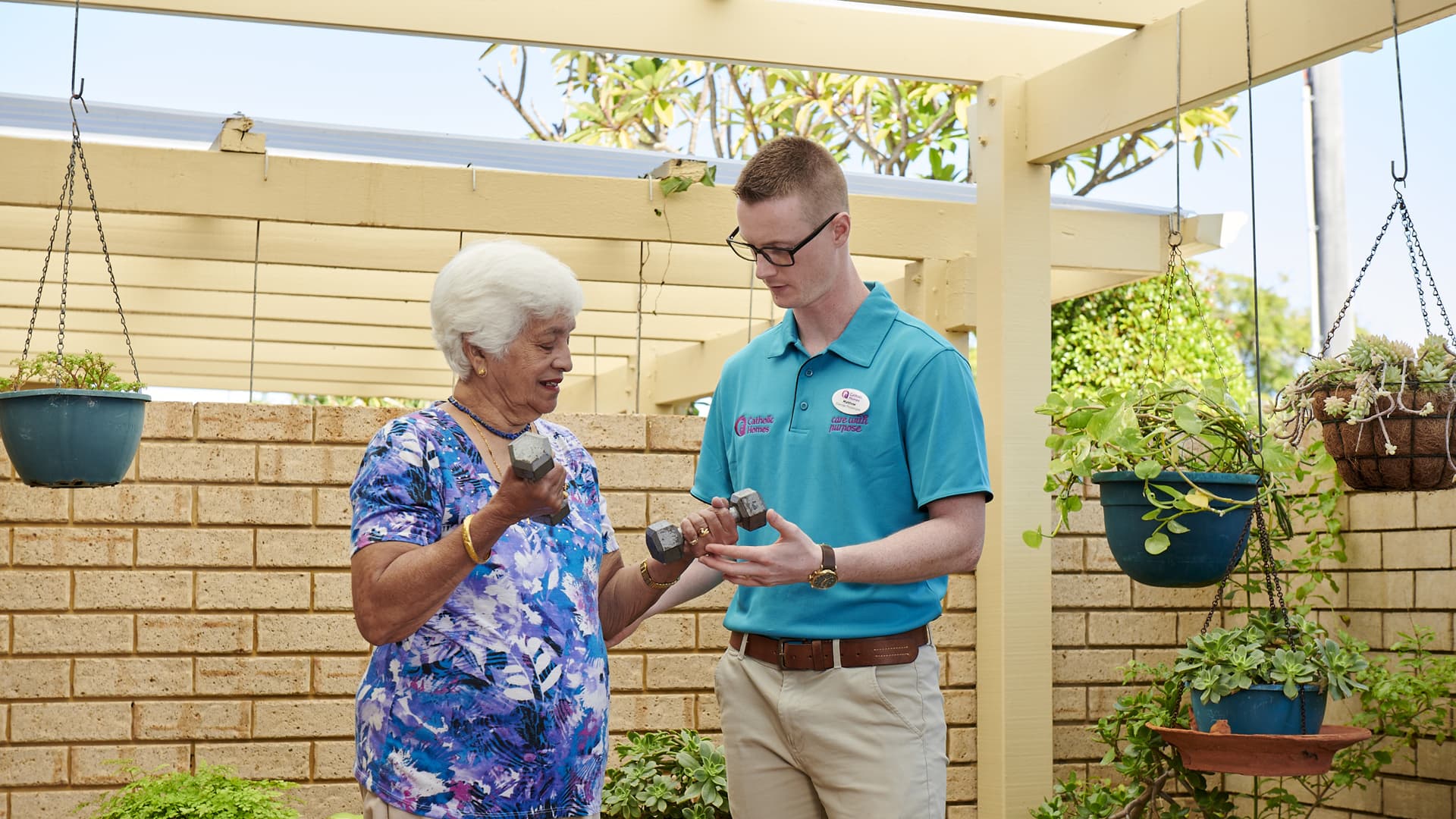
The more of these services you can use, the better. Ways to make the most of them include:
- Falls prevention – Exercise assists with strengthening muscles and balance. These exercises help prevent falls and can also be supported by a wellness officer.
- Nutrition – A healthy diet and supplements can aid areas of your life that you may not initially think of. For example, supplements that benefit wound care or slow cognitive decline.
- Cognitive decline – Occupational therapy can be extremely beneficial in implementing strategies and aids to memory recall
- Podiatry – lower leg and foot health maintenance is key to managing conditions like diabetes and chronic health conditions, as well as keeping you mobile and preventing falls.
- Physiotherapy / Exercise Physiology – to assist with everyday activities such as getting in and out of chairs and public transport. As well as improving mobility and strengthening to promote an active lifestyle.
- Clinical services – as well as all of the obvious uses of clinical services such as wound care and medication management. There are other aspects which you can utilise to ensure that you are maximising your budget; for example, regular clinical checks and assessments may prevent unexpected illnesses or injuries. Continence assessment.
- Continence aids and nutritional supplements – supplies can be purchased with funding, provided a relevant referral is available.
Independence
- Includes services such as:
- Personal Care – From 1st October, 2026, this will be fully funded from your support at home funding. This includes showering, dressing, shaving, oral care and application of moisturisers and creams. Hair washing. Toileting and continence support.
- Respite Care (non-residential) – This is particularly beneficial to anyone who is living as a carer and requires support to enable them to leave the home, whilst ensuring the client is safe and cared for in their absence. These are often 2-4 hour blocks of time, and support workers will keep your loved one safe, busy, nourished and cared for.
- Transport – convenient transport to and from appointments.
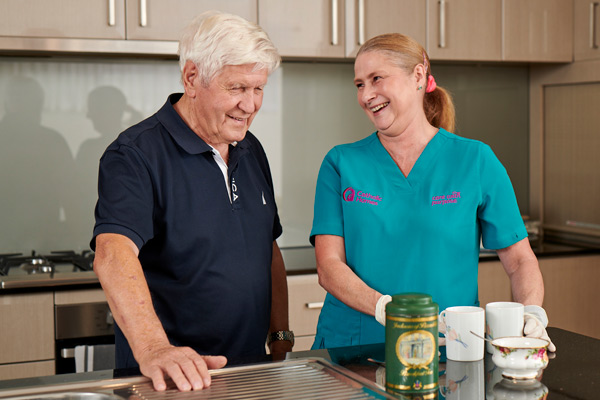
- Social Support (in-home) – carers will offer social support in your home – such as playing board games, card games, having chats over a cup of tea. Loneliness is a major contributing factor to decline in physical and mental health, and social support offers you the chance to have some company and social connection.
- Co-contributions
- Full Australian pensioners – 5%
- Part pensioner – 5% to 50%
- Self-funded – max 50%
Everyday Living
- Includes services such as:
- Domestic assistance (cleaning and laundry)
- Gardening
- Social support with transport (out of home, including shopping)
- Meal preparation
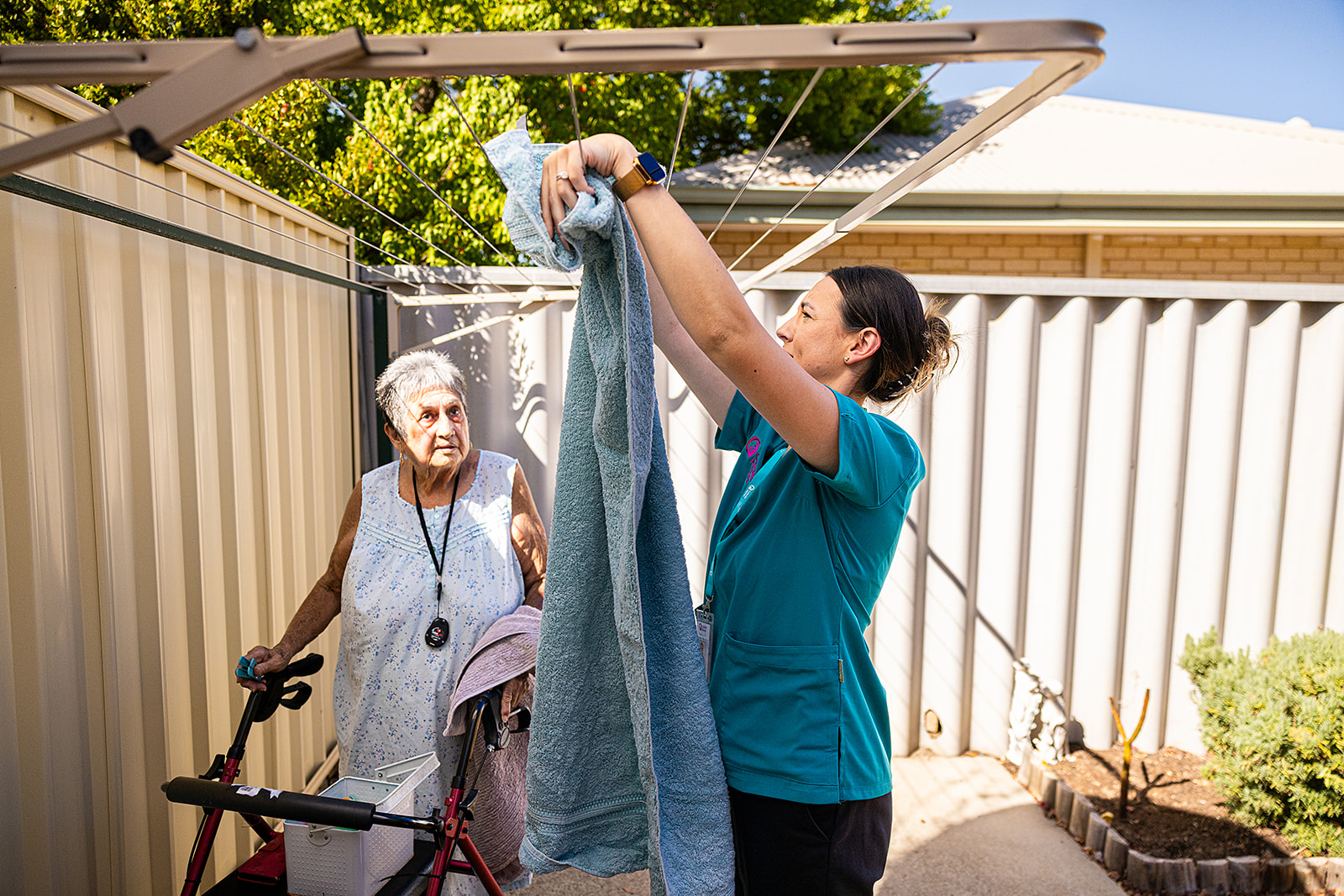
Due to the higher co-contribution for these supports, you may want to think about ways in which you can still receive the services you require while minimising your co-contributions. Reducing the frequency of everyday living support services allows you to utilise more funding for allied health, clinical services and independence services. You could also dedicate all of your funding to the other areas and pay for a private gardener or cleaner instead.
- Co-contributions
- Full Australian pensioners – 17.5%
- Part pensioner – 17.5% to 80%
- Self-funded – max 80%
With the introduction of these new levels, assisted living in Perth is now more accessible than ever.
Additional Funding Pathways
These pathways are in addition to your regular Support at Home funding. The pathways are designed as an opportunity to provide specific additional services and equipment over and above what is regularly provided. They are standalone and require additional review, assessment and approval from the assessment team.
These include:
It is important to ensure that you make the most of these funding opportunities, which include:
Restorative Care program (replaces STRC: Short-Term Restorative Care Program):
- Awarded when the assessor believes additional allied health and clinical services are required to rehabilitate.
- Examples of how you may use this:
- Wound care
- Recent hospital discharge
- In-home rehabilitation
- After a fall
- Sudden unexplained weight loss or gain
- Co-contributions may apply
Restorative Care program extension:
- $6000 over 12 weeks may be extended to a max of 16 weeks.
- If you feel that you are unable to access all of the allied health and clinical services you require through your support at home program, you or your case manager can request a review for the restorative care pathway.
- Examples of when you may choose to access would be: Wound care, Recent hospital discharge, in-home rehabilitation. After a fall
- Sudden unexplained weight loss or gain
Assistive Technology:
- Designed to promote independence, mobility and safety.
- Additional funding stream to complement your support at home funding.
- Low – $500
- Medium – $2,000
- High – $15,000
- Examples of available mobility aids:
- Four-wheel walkers,
- Walking sticks,
- Zimmer frames,
- Safety equipment like shower chairs, toilet raisers, etc.
Home Modifications:
- Designed to promote safety and accessibility within your home
- Additional funding stream to complement your support at home funding.
- Low – $500
- Medium – $2,000
- High – $15,000
- Examples of home modifications:
- Bathroom renovations
- Grab rails
- Ramps
Ready To Start Your Future Today?
Deciding on what home care is right for you or your family can sometimes feel overwhelming. Chat to the team at Catholic Homes for support throughout the entire journey. From help navigating My Aged Care and government funding paperwork to setting up your personalised budget and care plan, Catholic Homes will be there with you every step of the way.